The FHL banks must do more for housing
When the famed Depression-era criminal, Willie Sutton, was asked why he robbed banks he replied, “Because that’s where the money is.”
Nearly a century later, that’s still true, although modern technology has created new options for depositors; and modern bank robbers are as likely to be hackers hidden behind digital masks than stick-up crews with weapons in their belts.
But banks remain places where massive amounts of money are held. The problem is that some banks have become so remote and so insulated that they are operating like Willie Suttons in reverse: they are withholding money from those who have a rightful claim on its uses. This is a form of robbery. And it is not a victimless crime.
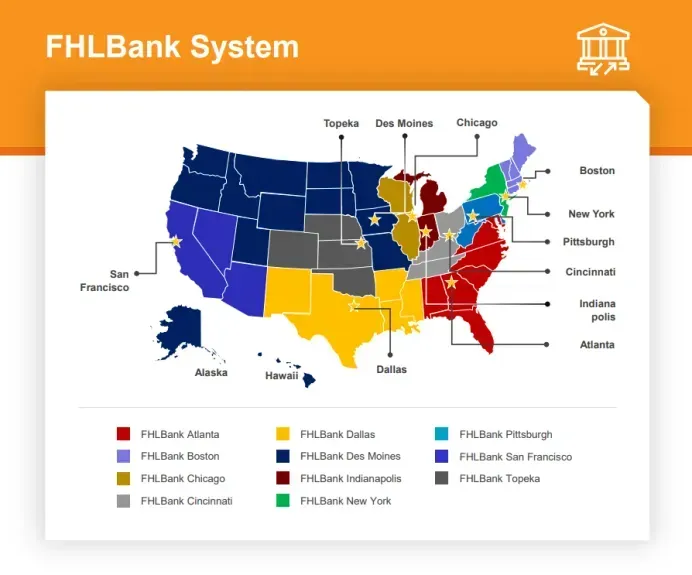
Take, for example, the nation’s
Federal Home Loan Bank system — a network of 11 regional banks founded in 1932. Its stated mission was to assist other member financial institutions so that they could invest responsibly in housing and community development efforts. The Federal Home Loan Banks offered lower cost financing to its members, saving them billions in the process.
As the decades passed, the system grew — now reporting approximately $1.7 trillion in assets. And while it boasts that it is a kind of co-op, benefitting its members and sending large dividends to its shareholders, it downplays the fact that it was and still is a government sponsored entity and that it receives significant subsidies to this day.
Last year, it received $7.3 billion in subsidy,
according to the Congressional Budget Office. During that same period, it dedicated only $752 million to an affordable housing program, mandated by statute. And it served the needs of many member institutions that failed to originate a single mortgage in the past five years. In fact, 40% of those institutions did nothing to make homeownership more accessible. The U.S. Air Force has a phrase for a self-perpetuating system that has no purpose other than to sustain itself: self-licking ice cream cone.
This self-licking ice cream cone shelled out $3.4 billion in dividends to its member banks, but spent less than a quarter of that on its housing obligation.
We would argue, in all seriousness, that the behavior of the Federal Home Loan Banks robs America’s cities and counties of desperately needed dollars that could stimulate an expansion of all forms of new housing.
It leads to intense and costly competition among those of us who have built affordable housing but would and could build much more if additional funding was forthcoming. It slows the production of housing, enriching those who already own their homes, but burdening all others with high costs.
It delays the time when a person can actually buy his or her first house. The average age of homebuyers currently is astonishingly high — 56 years old. And it traps hardworking Americans of all races, in all communities, in congregations of all faiths, in cramped, unhealthy, and sometimes dangerous housing.
So here’s what the current president should do in his remaining weeks in office or the newly elected president should do on Day One:
Demand that the banks increase their commitment to affordable housing from 10% (yielding $752 million) to 30% (which would generate $2.25 billion) per year. When pressed to increase by the
Treasury Department
recently, the banks’ flacks claimed that this was terribly unreasonable and would undermine the banks’ stability. That’s an odd claim to make, because for 22 years, from 1989 to 2011, the banks actually did commit 30% of their profits to both housing and paying back the federally subsidized bail-out in the aftermath of the savings and loan debacle.
The president should also demand that the banks stop providing low-cost capital and large dividends to members that do nothing to improve housing conditions in the country.
We live and work in a world where these resources, if properly redeployed and professionally managed and distributed, could make a difference.
It’s time to end the government-subsidized, tax-free ride that has benefited the Federal Home Loan Banks and their members, but not most Americans. There is enough money to address the nation’s housing crisis. It’s just being hoarded by those who control it, who engage in robbery on a scale that Willie Sutton could only dream of.
Brawley, Edmonds, and Daniels are pastors and leaders in Metro IAF affiliates in New York City and D.C. Gecan is a senior Metro IAF organizer and the author of “Going Public.